Mobile App vs Website: Which Is Better for Business?
A website and a mobile app solve different customer problems. The right first investment depends on how people discover, use and return to your business.
By Blue Black Beige
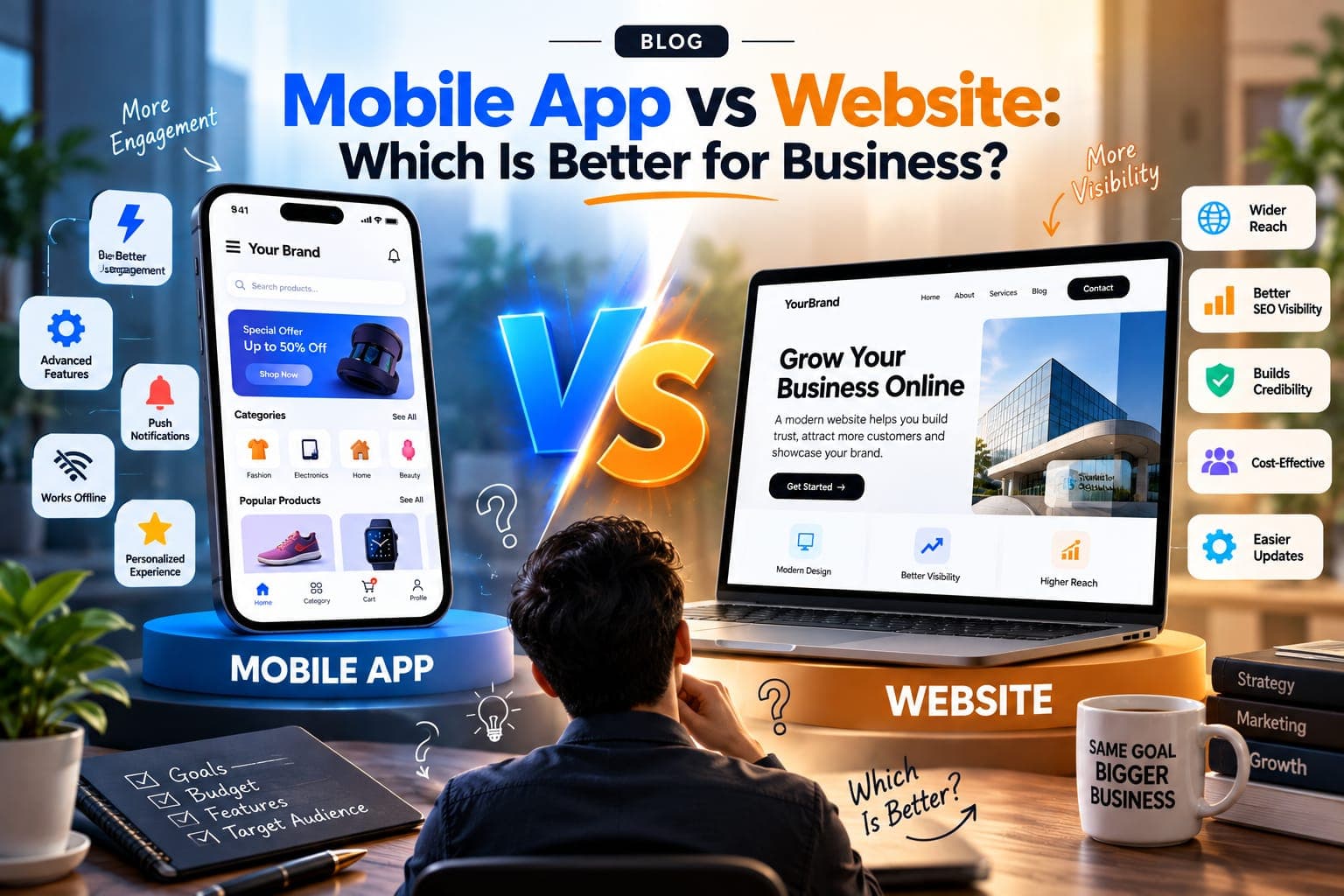
A website is often the first touchpoint. It helps people find a business through search, understand the offer, compare options and make contact without installing anything. A mobile app is built for deeper, repeated interaction, such as saved preferences, loyalty, notifications or account-based workflows.
Start with the customer behaviour
The question is not which technology is universally better. The useful question is which experience removes the biggest barrier to growth right now.
"Choose the product that matches how customers already want to use the business."
When a website is the better first step
A search-optimised website is usually the strongest foundation for a new business, a local service or a brand that needs credibility and discovery. It gives the team a flexible home for content, campaigns, enquiries and search visibility.
- Customers need to discover you through Google or local search.
- You want to explain services, build trust and generate enquiries.
- You are launching a new offer and need a cost-conscious foundation.
- The experience does not require accounts, push notifications or frequent repeat use.
When a mobile app earns its place
An app becomes valuable when customers return often and benefit from a more personal experience. It can support saved data, loyalty programmes, push notifications, offline moments and workflows that would feel repetitive in a browser.
- Customers have a recurring reason to come back.
- Personalisation or account features improve the service.
- Notifications can help people complete an important action.
- The product needs deeper device integration or an app-based habit.
A practical roadmap for choosing
Many businesses start with a strong website, learn how customers behave and then extend the experience into an app when repeat demand is clear. That roadmap keeps the first investment focused while leaving room for a richer digital product later.
Review the audience, the business goal, the expected frequency of use and the cost of maintaining each experience. The best solution is the one that creates a clear customer journey and can be improved with evidence.